
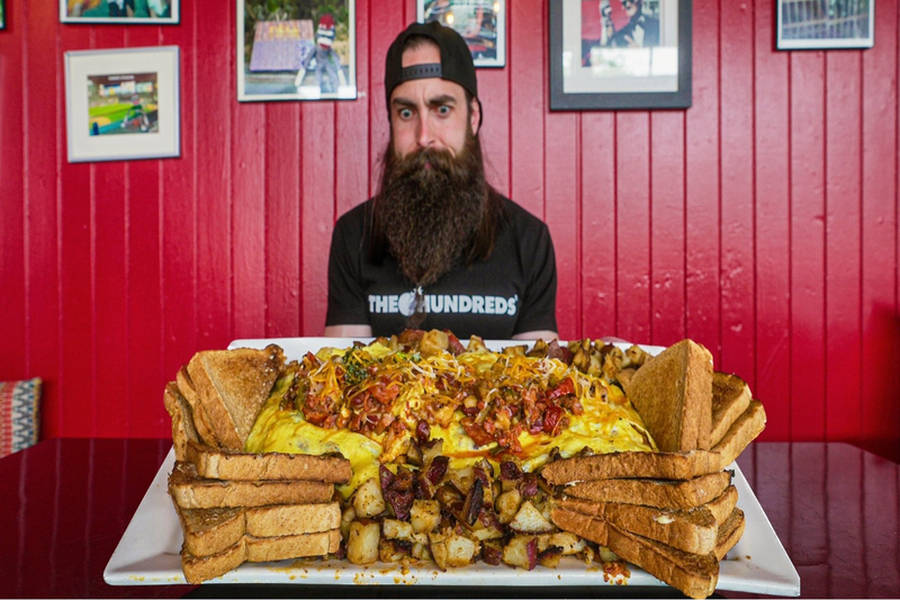
Scroll through YouTube for long enough and you’ll eventually land on BeardMeatsFood demolishing a mountain of burgers, pizzas, or desserts that would ruin most people’s physique for months. Yet despite regularly taking on food challenges that can run well into five figures for calories, Adam Moran remains lean, muscular, and visibly fit.
That contradiction is exactly what makes him interesting from a fitness perspective. His physique isn’t an accident, and it isn’t genetics doing all the heavy lifting. It’s the result of a very deliberate approach to calories, training, and long-term consistency that most people never see.
The important thing to understand first is that competitive eating is a tiny part of his life, not the foundation of it.
One Hour Of Chaos, A Full Week Of Control
Moran has repeatedly framed food challenges as a fraction of his weekly routine. A single challenge might take an hour. The week has 168 hours in it.
That framing matters because his body isn’t responding to one extreme meal. It’s responding to what he does before and after it. His physique is built during the other 167 hours: how he eats, how he trains, and how tightly he controls his overall energy intake.
This is where most people misunderstand what’s going on. They see the challenge, not the structure around it.
Weekly Calories, Not Daily Perfection
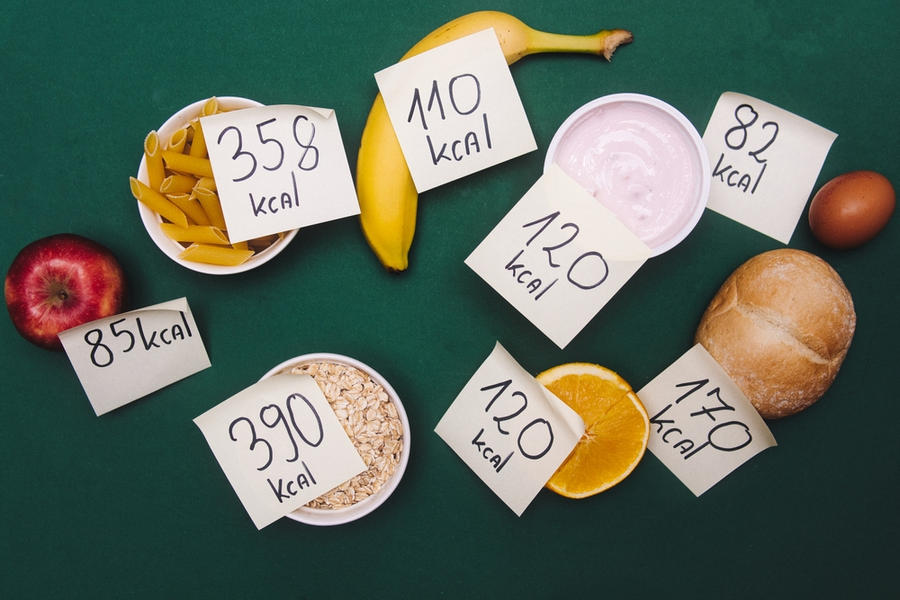
The core of Moran’s approach is managing calories over the week rather than obsessing over daily targets.
Instead of aiming to eat the same number of calories every day, he treats calories like a weekly budget. If his maintenance intake sits around a certain level, that gives him a rough total to work with across seven days. A massive surplus on one day doesn’t magically disappear, but it also doesn’t automatically lead to fat gain if it’s offset properly.
When he consumes an enormous amount of food for a challenge, he compensates by deliberately under-eating in the days that follow. Those low-calorie days aren’t accidental. They’re planned, controlled, and accepted as part of the process.
This approach is often called calorie banking or weekly calorie averaging. It isn’t a hack, and it isn’t glamorous. It’s basic energy balance applied over a longer time frame. Fat gain is driven by sustained surplus, not by one abnormal day in isolation.
What makes Moran unusual is not the theory. It’s his willingness to actually follow through on the compensation.
What He Eats Between Challenges
After a huge eating day, Moran doesn’t try to “eat clean” in a vague, lifestyle-blog way. He eats very little, very deliberately.
He has described keeping food simple and functional on low-calorie days. That typically means protein shakes, yoghurt, fruit, vegetables, and lean protein sources. Meals are built to be filling enough to function but low enough in calories to bring the weekly total back under control.
There’s no attempt to turn these days into comfort eating or flexible dieting. They exist to balance the maths. That level of detachment from food is something most people struggle with, especially after overeating.
It’s also why copying his approach without acknowledging that mental side usually fails.
Training Is The Other Half Of The Equation
Competitive eating is bad they said. You’ll get diabetes they said. 😂 #everyfilterpossible #afterdinnergains #beardmeatsfood 🍔💪🏆 pic.twitter.com/luy4bIitbl
— Beard Meats Food (@beardmeatsfood) July 7, 2017
Calories alone don’t explain his physique. Training does.
Moran is not casually active. He is a qualified personal trainer and has consistently spoken about following a rigorous strength training routine. Reporting around his training often mentions long weight-training sessions and a strong focus on resistance work.
That matters for several reasons.
First, heavy and consistent strength training preserves muscle mass even during aggressive calorie deficits. Second, muscle tissue raises baseline energy requirements, making it easier to absorb occasional calorie spikes without fat gain. Third, training volume adds to total energy expenditure across the week.
Without that training load, his calorie strategy would almost certainly result in a softer, heavier physique. The food challenges would win.
This is where a lot of copycat thinking breaks down. People focus on the eating pattern and ignore the fact that he trains like someone who takes his body seriously.
Health Isn’t Ignored Behind The Scenes
Another misconception is that Moran is reckless with his health. By his own account, he monitors health markers and has spoken about undergoing regular blood tests.
That doesn’t make competitive eating risk-free, and it doesn’t turn extreme intake into something universally advisable. But it does underline that his approach is calculated rather than careless. He treats his body as something to manage and monitor, not something he hopes will cope on its own.
Why This Works For Him And Fails For Most People

On paper, his system looks simple. Eat huge occasionally. Eat very little afterward. Train hard. Keep the weekly average sensible.
In practice, it’s brutally difficult.
Most people fail at one of three points. They underestimate how big the compensatory deficit needs to be. They struggle to stick to low-calorie days after overeating. Or they don’t train hard or consistently enough to support the intake pattern.
There’s also the psychological element. Moran treats eating as arithmetic. Many people treat it as emotion, reward, or relief. Those two mindsets do not produce the same outcomes.
The Real Takeaway
The real lesson from BeardMeatsFood isn’t that you can eat anything and stay shredded. It’s that body composition responds to what you do most of the time, not what you do occasionally.
His physique is the product of long-term discipline wrapped around short-term chaos. The chaos gets the views. The discipline does the work.
For most people, the smarter takeaway isn’t to copy his extremes, but to understand the principle underneath them: consistency over time beats isolated indulgence, and structure beats wishful thinking every time.