
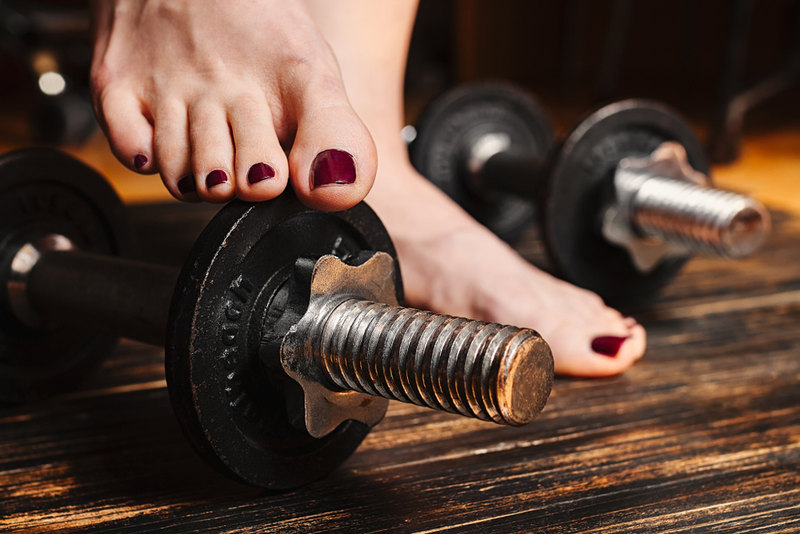
In most gyms, no—you’re not allowed to train barefoot.
The majority of commercial gyms require members to wear suitable footwear at all times. It’s part of their health and safety policy, and it’s usually enforced. Try to train barefoot on the gym floor and you’ll likely be told to put shoes on or leave.
That answers the question for most people straight away. If you train in a standard public gym, barefoot training isn’t really an option.
So why does the idea keep coming up?
Because outside of gym rules, there are genuine reasons why some people prefer training without shoes—especially when it comes to strength work.
Why People Even Consider It
The main reason is stability.
Most gym-goers train in running shoes, which are designed for cushioning and impact absorption. That’s ideal for cardio, but not for lifting weights. When you’re under load, that soft sole compresses slightly, which can make you feel less stable.
Take the cushioning away and you’re closer to the ground. For certain lifts, that can make a noticeable difference.
Common reasons people choose barefoot training include:
- A more stable base during heavy lifts
- Better balance and control under load
- Reduced wobble compared to soft trainers
- Improved awareness of foot positioning
- A stronger “connection” to the floor
For lifts like deadlifts, even a small increase in stability can improve how the movement feels. It’s not magic, but it’s noticeable.
There’s also the foot-strength argument.
Your feet contain muscles that play a role in balance, posture and force transfer. Constantly wearing cushioned, supportive shoes means those muscles don’t have to work as hard. Training without shoes—or in very minimal footwear—can help re-engage them.
That doesn’t mean barefoot training is essential, but it does explain why some lifters feel more controlled and grounded when they do it.
Where It Actually Makes Sense
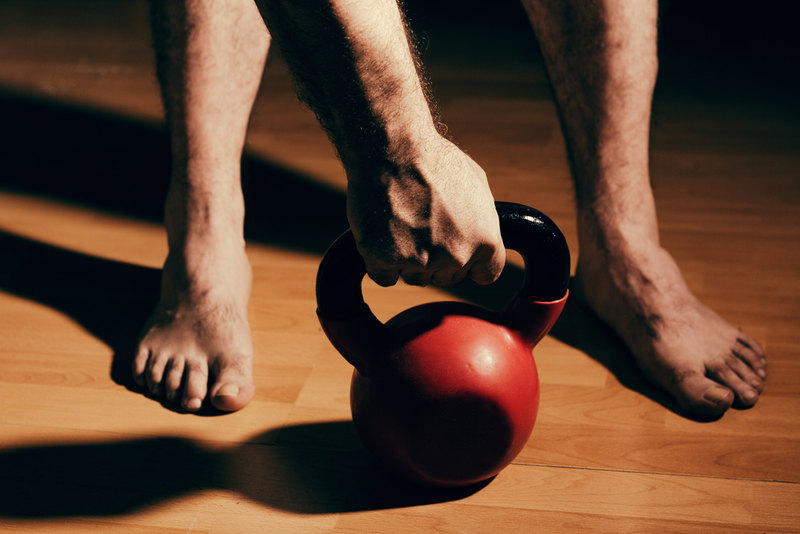
Even though most gyms don’t allow it, there are situations where barefoot training can be useful.
The key is environment. If you’re in a controlled setting—like a home gym or a private training space—it can have a place in your routine.
It tends to work best for:
- Deadlifts and Romanian deadlifts
- Bodyweight squats and split squats
- Kettlebell work that emphasises control
- Balance and stability drills
- Foot-strength and mobility exercises
In these situations, being closer to the ground can improve control and help you feel more stable throughout the movement.
It can also be useful as a short addition to your training rather than the main focus. For example, doing some barefoot balance work or light strength exercises at the end of a session.
What it isn’t is a universal upgrade. You don’t need to train barefoot for everything, and treating it as some kind of hidden advantage usually misses the point.
Where It Doesn’t Work
Even if gym rules weren’t an issue, barefoot training wouldn’t suit every type of exercise.
Cardio is the clearest example. Running barefoot on a treadmill places different stresses on the feet and lower legs. Unless you’ve specifically adapted to that style of training, it can increase your risk of discomfort or injury rather than reduce it.
It’s also impractical in a busy gym setting.
Commercial gyms are shared environments, and they’re not always as tidy or controlled as you might like. You’re dealing with other people, moving equipment and the occasional bit of chaos.
Without shoes, your feet are exposed to:
- Dropped weights and plates
- Loose or misplaced equipment
- Slippery surfaces from sweat or cleaning products
- Accidental contact with machines or benches
Shoes provide a basic layer of protection that most people take for granted. Once you remove that, the risk becomes more obvious.
Then there’s hygiene.
Gyms see a lot of foot traffic, and while they’re cleaned regularly, they’re still shared spaces. Going barefoot increases your exposure to common issues like fungal infections or skin irritations. Even if the risk isn’t massive, it’s enough for most gyms to take a cautious approach.
That’s why footwear rules are so common—and why they’re unlikely to change.
Who Should Be More Careful
For some people, barefoot training isn’t just unnecessary—it’s something to approach with caution or avoid altogether.
If you have existing foot or lower-limb issues, removing support and protection can make things worse rather than better.
That includes people with:
- Plantar fasciitis or ongoing foot pain
- Ankle instability or previous injuries
- Reduced sensation in the feet
- Balance issues
Changing how your foot interacts with the ground changes how force travels through your body. If something is already off, that change can expose it quickly.
Even for healthy individuals, switching to barefoot or minimalist training should be gradual. Going straight from cushioned trainers to fully barefoot lifting every session isn’t a smart move.
The Smarter Approach
For most people, the solution isn’t to go barefoot—it’s to fix their footwear.
If you’re lifting in soft, cushioned running shoes, you’re already at a disadvantage for strength work. Switching to a flatter, firmer shoe gives you the same stability benefits without the downsides.
Better options for people at all levels include:
- Flat trainers (such as Converse-style or Vans-style shoes)
- Minimalist gym shoes with thin, firm soles
- Deadlift slippers (if your gym allows them)
- Weightlifting shoes for squats and Olympic lifts
This approach gives you a stable base while still protecting your feet and staying within gym rules.
It also allows you to match your footwear to the activity. Use supportive, cushioned shoes for running. Use flat, stable shoes for lifting. That simple adjustment solves most of the problems people try to fix by going barefoot.
What It Comes Down To
If you train in a typical commercial gym, you’re not allowed to go barefoot—and that’s the reality most people need to work with.
Outside of that setting, barefoot training can have some benefits, particularly for stability-focused strength work and foot engagement. But those benefits are specific, not universal.
In practice, you don’t need to choose between thick running shoes and no shoes at all. There’s a middle ground that gives you the advantages without the drawbacks.
If your goal is to feel more stable, lift more efficiently and train with better control, start by changing your footwear. In most cases, that will get you exactly what you’re looking for—without turning your gym session into a rule-breaking exercise.