
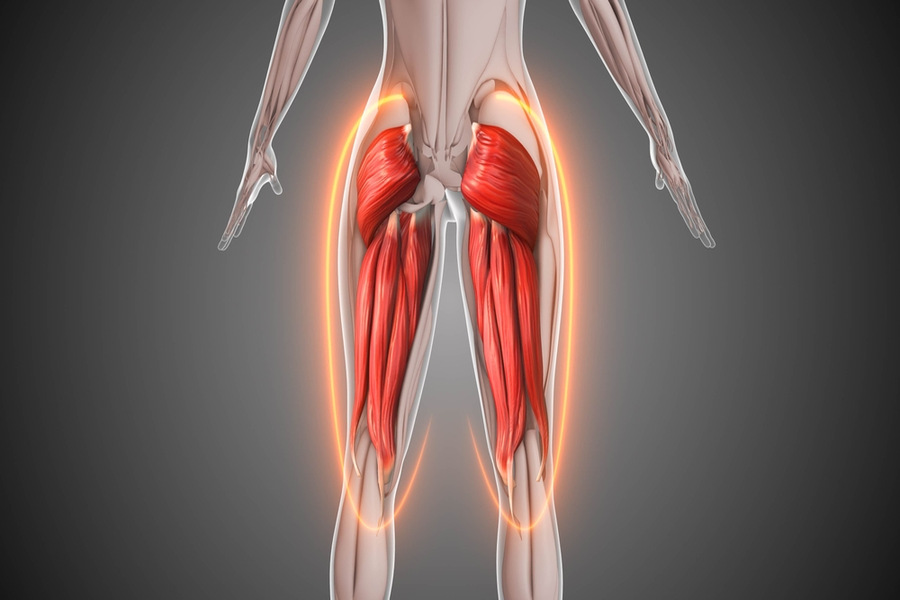
Desk work puts the hamstrings into a semi-shortened position for hours at a time. That alone isn’t unusual — muscles shorten and lengthen constantly — but the problem is the duration.
When the hips stay flexed all day, the hamstrings adapt by becoming stiffer and less capable at longer lengths. Meanwhile the hip flexors stay switched on, pulling the pelvis into a posterior tilt.
That shift makes the hamstrings feel even tighter when you stand because they are being stretched from a mechanically disadvantaged position.
Why Weakness Matters More Than Tightness
Many people assume their hamstrings are inflexible when the real limitation is strength. A muscle that cannot produce force at the end of its range will feel tight, even if it has the potential to lengthen further.
This is why desk workers often complain that stretching helps briefly but everything seizes up again a few hours later. The body is simply protecting a weak position. Building strength at longer lengths restores control, which reduces the need for that protective tension.
Static stretching lengthens the tissue temporarily, but without building strength in that new range the effect fades. Think of it as pulling on a piece of elastic that hasn’t been reinforced — it returns to its previous shape quickly. Mobility work paired with strength training creates lasting change because the muscle learns to generate tension where it was previously unstable.
How Desk Posture Sets You Up For Problems
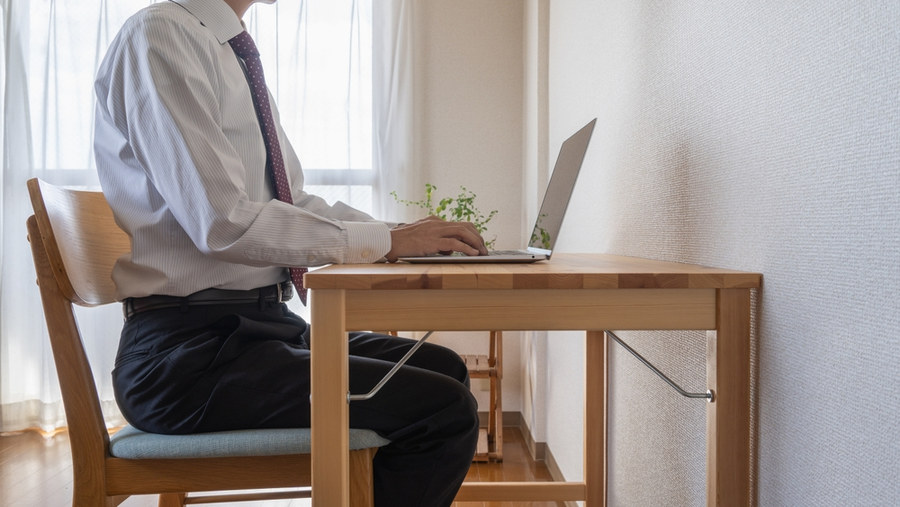
Most standard office chairs put the hip angle somewhere between ninety and one hundred degrees. With the pelvis rolled back, the glutes switch off, leaving the hamstrings to stabilise the lower body in a way they were never meant to.
Over a full working week this creates a cycle of underuse, stiffness, and compensation patterns that show up when you train. Runners feel it as reduced stride length. Lifters notice their deadlift lockout feels weaker. Even daily activities like walking uphill or climbing stairs become subtly less efficient.
What You Can Do About It
You can’t quite your job, that’s not realistic, so what can you do to combat this hamstring issue?
Daily Fixes You Can Build Into Your Routine
Small changes that you do consistently is the answer here:
- Micro-breaks: Stand up every twenty to thirty minutes and fully extend your hips. This interrupts the shortening process and reminds the posterior chain how to work.
- Desk-based hip extension: When you stand, lightly contract the glutes for a few seconds. This repositions the pelvis and reduces passive hamstring tension.
- Active straight-leg raises: These teach the hamstrings to control length, not just passively accept it. They also highlight imbalances between sides.
- Calf and foot activation: Sitting often reduces lower-leg engagement. Light calf raises or short foot drills improve ankle mechanics, which in turn affects hamstring tension during walking and lifting.
Small Desk Changes That Make A Big Difference
You can also optimise your desk setup:
- Seat height: Aim for hips slightly above knees to encourage a neutral pelvis.
- Workspace layout: Keep your keyboard and mouse close enough that you are not reaching and collapsing the chest, which indirectly affects pelvic position.
- Variability over perfection: There is no single ideal posture. The best strategy is to cycle through multiple positions across the day — seated upright, seated relaxed, standing, leaning — so no single structure gets overloaded.
Training Solutions That Rebuild Hamstring Function
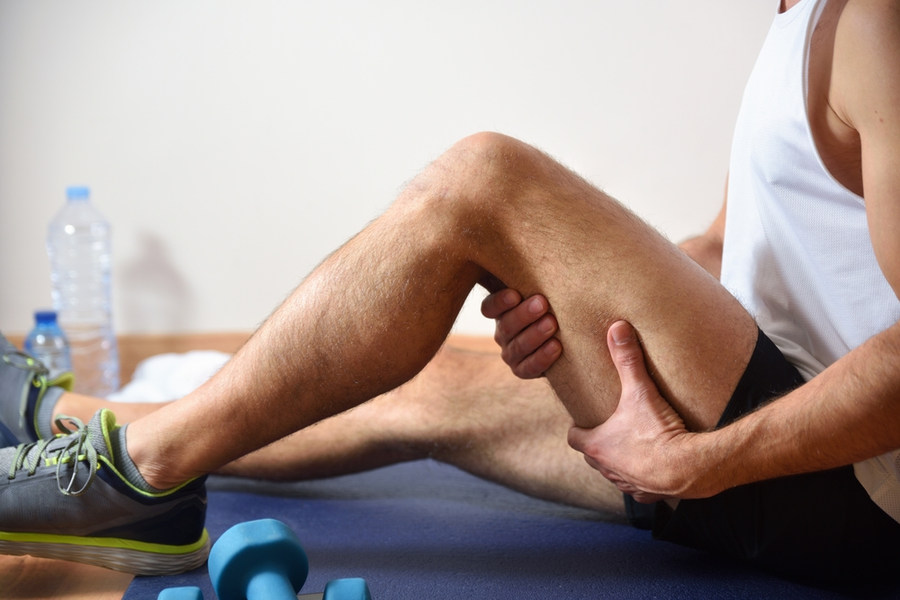
The daily changes and desk alteration help limit the impact, but you can reinforce this when you train:
- Romanian deadlifts: Prioritise slow eccentrics and maintain a slight bend in the knees. For most desk workers, the goal is to strengthen the hamstrings while teaching the pelvis to stay neutral under load.
- Nordic curls and regressions: Even partial-range Nordics significantly improve strength at long muscle lengths. Using a resistance band for assistance makes the pattern accessible to more people.
- Hamstring sliders: These are ideal for home sessions. Sliding eccentrics train both hamstring strength and pelvic control without heavy equipment.
- Single-leg hinging movements: Variations like single-leg Romanian deadlifts improve stability and load each limb individually, which is useful because desk habits often create asymmetries.
Understanding The Bigger Picture
Hamstring tightness is rarely just a flexibility issue. It is a strength problem, a posture problem, and a movement problem created by long, uninterrupted sitting.
The good news is that the solution doesn’t require overhauling your lifestyle. Small but consistent changes add up: move more frequently, strengthen the hamstrings in the ranges where they struggle, and set up your workspace so the pelvis can sit naturally.
Over time you will notice fewer aches, better posture, and more stability in everything from gym lifts to everyday movement.