
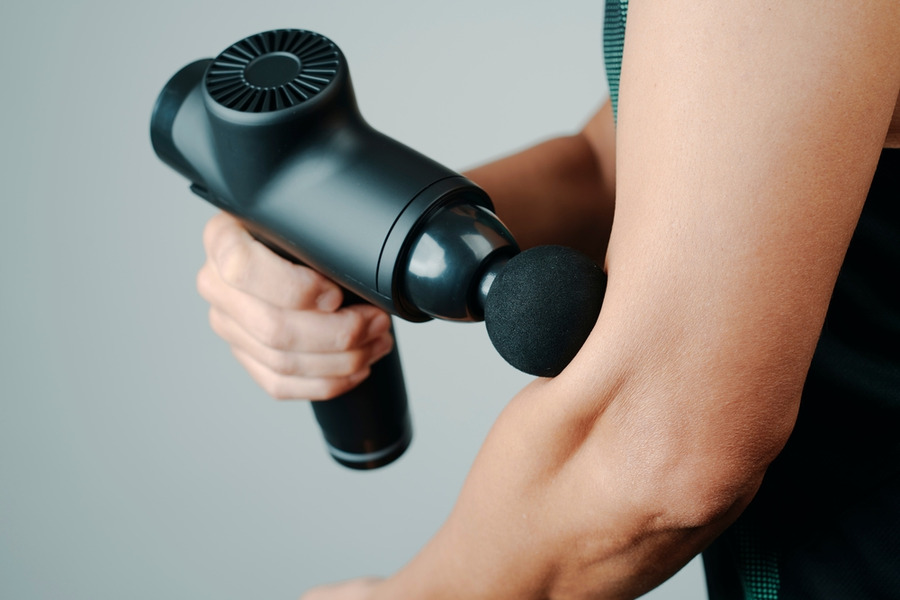
You’ve probably seen them everywhere — in gyms, on TikTok, in the hands of pro athletes after a game. Massage guns, with their rapid-fire “percussive therapy,” promise to blast away soreness, loosen tight muscles, and help you bounce back from workouts faster.
They’re marketed as a recovery game-changer, replacing expensive sports massages with a quick, portable alternative. But with some models costing well over £200, it’s fair to ask: do massage guns really work, or are they just a high-tech gimmick?
Let’s break down what they claim to do, what the science says, and whether they deserve a spot in your recovery toolkit.
What Massage Guns Claim to Do
Massage gun brands typically promise three main benefits:
- Reduced soreness – easing DOMS (delayed onset muscle soreness) after tough sessions.
- Improved circulation – increasing blood flow to speed up healing.
- Better mobility – loosening stiff muscles so you can move more freely.
They work by delivering rapid, repetitive pulses into the muscle tissue — a method called percussive therapy. The idea is that these pulses stimulate the nervous system, reduce muscle tension, and encourage blood flow, similar to deep-tissue massage but without a therapist’s hands.
The marketing also leans heavily on convenience: the ability to target sore spots in seconds, without undressing or lying down, and without the awkward positions foam rolling sometimes requires. Many brands suggest they’re a perfect warm-up tool as well as a recovery aid — “activating” muscles before you train so you move more efficiently.
While that sounds appealing, the question is whether these claims hold up under scrutiny, or whether it’s mostly clever branding.
The Science Behind Percussive Therapy

Research into massage guns is still developing, but what we have so far paints a mixed picture.
A 2020 study in the Journal of Sports Science & Medicine found that a short burst of percussive therapy could increase range of motion without reducing muscle strength. That’s significant because traditional stretching can sometimes decrease immediate performance — suggesting massage guns might be useful before a workout.
Another 2021 paper in the International Journal of Environmental Research and Public Health reported that vibration-based therapy (including massage guns) reduced perceived soreness after exercise. In plain English: people felt less sore. However, these studies measure perceived recovery, not actual repair at the muscle fibre level.
Here’s where the science gets tricky: muscle recovery is a complex biological process involving inflammation, protein synthesis, and nervous system regulation. While percussive therapy may temporarily improve blood flow and reduce tightness, there’s no strong evidence it speeds up the cellular repair process in the way sleep, nutrition, and hydration do.
That doesn’t mean they’re useless — far from it. The nervous system response to vibration can reduce pain signals, relax muscle tone, and allow for smoother movement. This can indirectly support better training and potentially help you get back into workouts sooner, even if the actual tissue healing time remains unchanged.
Compared to foam rolling, massage guns offer more targeted pressure and can reach awkward spots like calves, glutes, or traps without awkward body positioning. However, foam rollers and sports massage are still more effective for larger muscle groups and for addressing overall mobility patterns rather than pinpoint knots.
How and When They Can Actually Help
Used correctly, massage guns can be a valuable part of your recovery strategy — but the key word is part.
For post-workout recovery, they can be used for 1–2 minutes per muscle group to reduce stiffness and improve comfort. Many athletes use them in the hours after training to help them move more freely the next day.
For pre-workout activation, short bursts can stimulate blood flow and muscle readiness without the potential performance drop of static stretching. For example, hitting the quads and glutes for 30 seconds each before squats can make your first working sets feel smoother.
They can also be useful between training sessions when you’re sore but still need to move — think back-to-back training days or tournament weekends. The sensation of looseness they provide can help maintain performance, even if they’re not truly accelerating repair.
Practical usage tips include:
- Stick to low or medium settings for most muscles — the highest speeds are often overkill.
- Keep sessions short to avoid overstimulating tissue.
- Use the right attachment for the muscle group (wider heads for large muscles, bullet tips for specific knots).
And remember: their effect is temporary. To make it last, combine use with active recovery methods like light movement, stretching, or mobility drills.
When They’re Not Worth It (or Could Be Harmful)
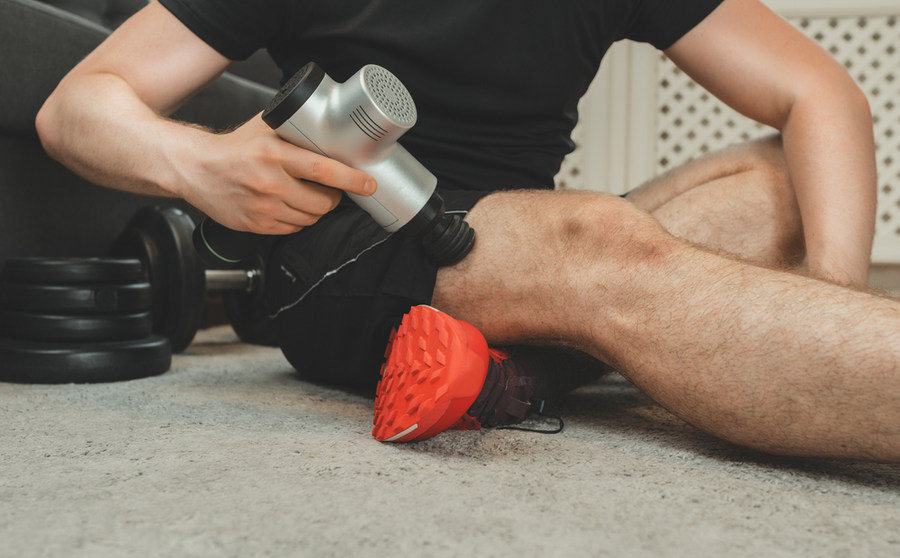
Despite their benefits, massage guns are not suitable for everyone or every situation.
You should avoid using them directly over acute injuries such as muscle tears, sprains, or severe bruises, as the extra force can worsen inflammation and damage. They’re also not recommended for people with certain medical conditions like deep vein thrombosis, severe osteoporosis, or nerve disorders, unless cleared by a healthcare professional.
Overuse can cause more harm than good. Using them for too long in one area can lead to bruising, muscle spasms, or even nerve irritation. The sensation of relief can be deceptive — just because it feels good doesn’t mean the tissue is ready for heavy loading again.
They’re also not a shortcut to recovery. If you’re regularly training hard but neglecting sleep, nutrition, and proper rest days, a massage gun won’t make up for those deficits. Think of it as the icing on the cake — not the cake itself.
Finally, for some people, the cost-to-benefit ratio just doesn’t stack up. If you’re on a tight budget, a £20 foam roller, a resistance band, and some mobility work can deliver similar benefits for a fraction of the price.
Verdict
So, do massage guns really speed up muscle recovery? The honest answer is: they can make recovery feel easier and can help you move more comfortably, but they don’t dramatically speed up the body’s repair process.
What they do offer is convenience, targeted relief, and a satisfying way to loosen muscles before and after training. If you enjoy the sensation and can afford one, it’s a worthwhile addition to your kit — as long as you use it safely and alongside proven recovery methods.
If you’re looking for an instant fix to muscle damage, you’ll be disappointed. But if you value comfort, mobility, and the feeling of being “ready to go” sooner, they can be a genuinely useful tool. Just remember: the real recovery heroes are still good sleep, balanced nutrition, and smart training choices.