
Karate can look intimidating if you have never done it before. You might picture black belts throwing head-height kicks, people shouting in perfect lines, and everyone looking like they were born with flexible hips and excellent core strength.
That is enough to put adults off before they even start.
The truth is less dramatic. You do not need to be fit to start karate. You need to be willing to learn, move, make mistakes and feel awkward at first.
A beginner class should not expect you to arrive conditioned like a competitive fighter. In fact, karate is often one of the things that helps people build fitness in the first place.
Karate Is Something You Get Fit Through
One of the biggest mistakes people make is thinking they need to get fit before joining a class. They say they will start once they have lost weight, built some stamina or stopped feeling self-conscious.
The problem is that “getting fit first” can easily become a permanent delay.
Karate training builds fitness gradually because it uses the whole body. You are learning stances, footwork, strikes, blocks, kicks, patterns and partner drills. Your legs, hips, shoulders, arms and core all get involved.
At first, it may feel more like learning coordination than doing a workout. You might spend half the class trying to remember which foot goes where. But that still counts. You are moving, concentrating, balancing and using muscles that may have been quietly minding their own business for years.
Over time, the physical side becomes more obvious. You hold stances for longer. You move faster between techniques. Your breathing settles. You recover more quickly between drills. Fitness sneaks up on you.
You Do Not Need To Be Flexible
Flexibility is another common worry. A lot of people assume karate means high kicks, deep stances and being able to fold yourself into shapes last seen in a yoga advert.
Good news: you do not need to be bendy to start.
Most beginners are stiff somewhere. Hips, hamstrings, ankles, shoulders — take your pick. Karate can help improve flexibility, but it does so through repetition, warm-ups, mobility work and controlled practice. Nobody sensible should expect a new adult student to throw a perfect head kick in week one.
You are much more likely to begin with basic stances, straight punches, simple blocks and low or middle-height kicks. The key is not forcing it. Flexibility gained patiently is useful. Flexibility chased aggressively is how people annoy their knees, hips and lower back.
Will Karate Make You Out Of Breath?
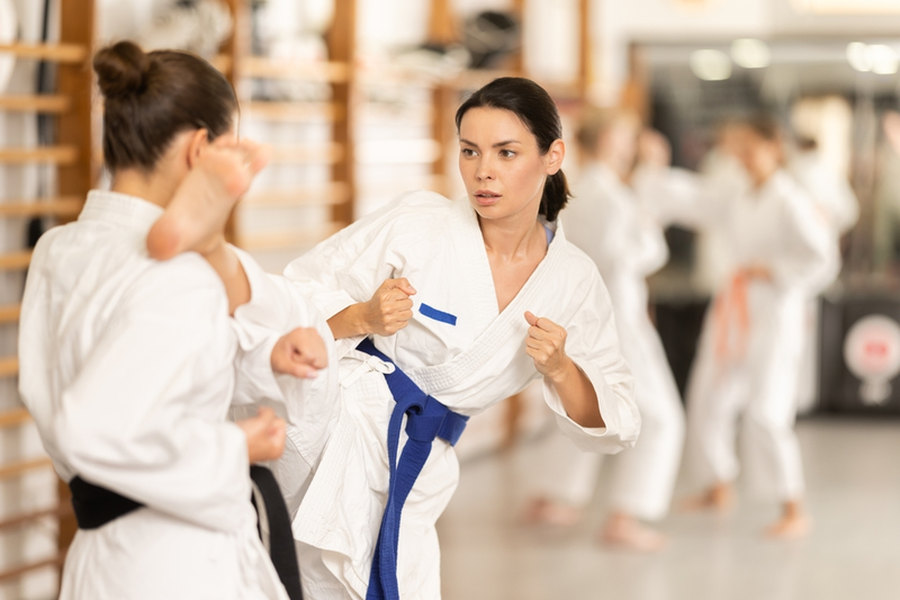
Yes, probably. Not all the time, and not in every class, but there will be moments when you realise karate is harder work than it looks.
Pad work, repeated kicking drills, sparring exercises and fast combinations can push your heart rate up quickly. Even basics can be tiring if you are doing them properly, because karate asks you to stay controlled rather than simply flail around until the timer stops.
That does not mean you have to keep up with everyone straight away. A good instructor would rather see a beginner working safely and steadily than pretending to be fine while turning an alarming shade of beetroot.
If you are very unfit, pace yourself. Take a moment when you need it. Drink water. Ask questions. There is no prize for destroying yourself in the first class and then never going back.
Strength, Balance And Body Awareness
Karate will not build muscle in the same way as a structured weights programme, but it can improve functional strength. Stances challenge the legs. Punches and blocks use the shoulders, back and core. Kicks demand hip strength, balance and control.
It is also good for body awareness. You learn where your weight is, how to shift it, how to rotate through the hips and how to generate power without just tensing everything at once. For many adults, this is one of karate’s biggest advantages. It gives you a reason to move better, not just move more.
This is also why karate can be useful for people who find conventional exercise boring. You are learning a skill, which gives each session a purpose beyond “I suppose I should exercise today”.
The Mental Side Is A Big Part Of It
Karate is physical, but the mental side is one of the reasons it appeals to adults. It asks for focus. You cannot spend the whole class doom-scrolling in your head when someone is telling you to step, block, turn and punch in the correct order.
Training gives your brain a job. You listen, watch, copy, adjust and try again. It can also build confidence. You remember a sequence that confused you last month. You manage a drill that used to wipe you out.
Are You Too Old To Start?
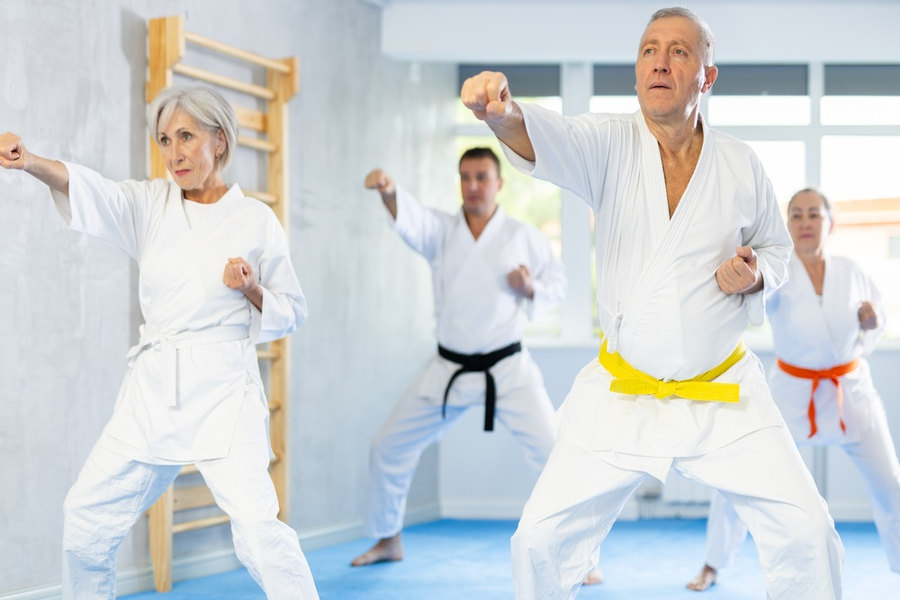
Probably not.
Your training may look different depending on your age, injury history and fitness level, but different does not mean pointless.
The important thing is choosing the right club. Look for a beginner-friendly class where the instructor takes safety seriously, explains things clearly and does not treat every adult newcomer like they are auditioning for a fight scene.
If you have medical concerns, have not exercised for a long time or are carrying an injury, get medical advice before starting and tell the instructor before the class begins. That is sensible.
What To Expect From A First Class
A typical beginner class might include a warm-up, mobility work, basic stances, punches, blocks, kicks, combinations and possibly partner drills. You may train barefoot. You may start in loose gym clothes before buying a karate gi. You may hear unfamiliar Japanese terms, depending on the style and club.
You will almost certainly feel clumsy. That is normal. Everyone else felt clumsy once too.
Your first job is not to be good. Your first job is to turn up, listen and try.
So, Do You Need To Be Fit To Start Karate?
No. You need enough basic mobility to take part safely, and you need to respect your current limits, but you do not need to arrive already fit, flexible or confident.
Karate is not just for the naturally athletic. It is for people willing to start where they are and improve from there.
If the gym bores you, running feels miserable and you want exercise with a bit more purpose, karate could be a strong option. You may get fitter, stronger, more mobile and more confident, but only if you do the one thing that matters most at the beginning: walk into the first class.