
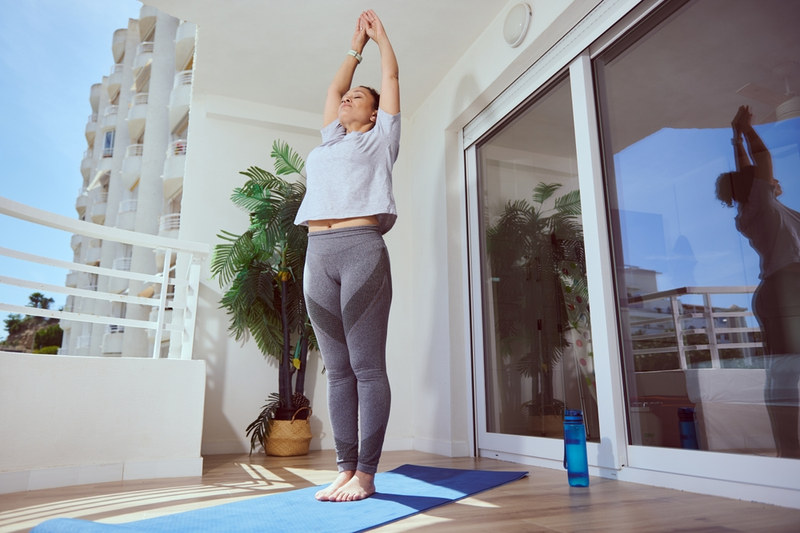
Working out at home sounds simple until you live above someone else. A quick set of burpees might feel harmless in your living room, but it can sound very different through a neighbour’s ceiling.
If you live in a flat, the best home exercises are not always the most dramatic ones. They are the movements that challenge your muscles, raise your heart rate, and fit into a small space without turning your workout into a noise complaint.
The good news is that you do not need to jump, stomp, or buy a bulky treadmill to train effectively. A quiet routine can still build strength, improve fitness, and help you stay active. The key is choosing exercises with control.
What Makes An Exercise Flat-Friendly?
A flat-friendly workout should be low impact, compact, and easy to perform with minimal equipment. That does not mean it needs to be easy. Low impact simply means avoiding movements that involve heavy landings or repeated jolts through the floor.
Slow, controlled exercises are often more demanding than people expect. A set of split squats or tempo push-ups can work your muscles hard without making much noise. You can also use pauses, slower repetitions, and shorter rest periods to make an exercise more challenging.
An exercise mat is useful if you have hard flooring. It will not completely soundproof your workout, but it can soften contact with the floor and make kneeling or lying exercises more comfortable.
Squats And Split Squats
Bodyweight squats are one of the easiest lower-body exercises to perform quietly. Keep your feet planted, lower yourself under control, and avoid rushing back to standing. To make them harder, take three seconds to lower yourself, pause briefly at the bottom, then stand up steadily.
Split squats are a stronger option once regular squats become too comfortable. Place one foot in front of the other, lower your back knee towards the floor, and push through your front foot to rise again. Because each leg works separately, you can create a meaningful challenge without needing heavy weights.
Reverse lunges can also work well, provided you step back softly and maintain control.
Glute Bridges
Glute bridges are quiet, simple, and useful for training the muscles around your hips and glutes. Lie on your back with your knees bent and your feet flat on the floor. Lift your hips, squeeze your glutes briefly, then lower yourself slowly.
The basic version is accessible for beginners, but it is easy to progress. Try holding the top position for longer, adding more repetitions, or moving to a single-leg glute bridge. You can also place a dumbbell across your hips if you have one.
Push-Ups And Incline Push-Ups

Push-ups work your chest, shoulders, triceps, and core while requiring little space and no equipment. The standard version can be difficult if you are new to strength training, though.
Incline push-ups are a sensible starting point. Place your hands on a stable surface such as a sturdy table, worktop, or sofa edge, then lower your chest towards it under control. As your strength improves, move to a lower surface before progressing to floor push-ups.
Avoid using anything that could slide or tip over. A stable surface matters more than making the exercise look impressive.
Rows With A Resistance Band Or Dumbbell
Training your back at home can be more difficult because pulling movements are harder to replicate without equipment. A resistance band or dumbbell makes a real difference.
For a dumbbell row, support yourself on a stable chair or sofa, keep your back in a comfortable neutral position, and pull the weight towards your side. If you use a resistance band, anchor it only to something secure and follow the manufacturer’s instructions.
Rows are worth including because a balanced routine should not consist entirely of squats, push-ups, and abdominal exercises.
Wall Sits
Wall sits are ideal when you want a lower-body exercise with almost no movement. Stand with your back against a wall, slide down until your knees are comfortably bent, and hold the position.
Start with a shorter hold and a shallower position, then build up gradually. Wall sits can be uncomfortable in the way a good leg exercise often is, but they should not cause sharp pain.
Dead Bugs And Bird Dogs
Dead bugs and bird dogs are useful core exercises because they encourage controlled movement rather than frantic repetitions.
For a dead bug, lie on your back with your arms raised and your knees bent. Slowly lower the opposite arm and leg while keeping your middle controlled, then return to the starting position. For a bird dog, begin on your hands and knees and extend the opposite arm and leg.
Both exercises require concentration and create very little noise.
Calf Raises
Calf raises are easy to overlook, but they can be performed almost anywhere. Stand upright, lift your heels, pause, then lower them slowly.
Use a wall or stable chair for balance if needed. Once the basic version feels easy, try single-leg calf raises or hold a dumbbell to increase the resistance.
Low-Impact Cardio That Will Not Annoy The Neighbours
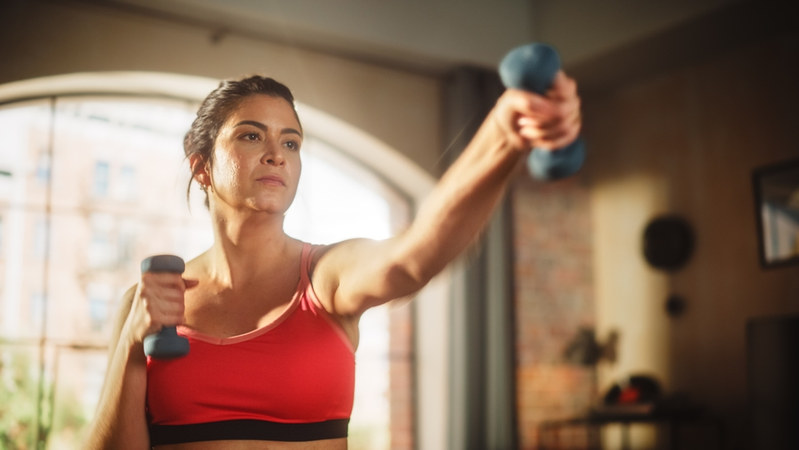
Cardio in a flat takes a little more thought, but it is still possible. Marching briskly on the spot, shadow boxing, controlled step jacks, and low-impact squat-to-reach movements can all raise your heart rate without heavy landings.
Shadow boxing is particularly useful because it needs very little room. Keep your feet light and focus on steady combinations rather than bouncing around the floor. A brisk walk outside can also complement your home strength sessions without taking up space indoors.
You do not need to turn every workout into an exhausting circuit. A quiet strength session followed by a walk is often more practical than forcing high-intensity cardio into a small living room.
A Simple Quiet Home Workout
A basic flat-friendly session could include:
- 10 to 15 squats
- 8 to 12 incline push-ups
- 8 to 12 split squats on each side
- 10 to 15 glute bridges
- 8 to 12 dumbbell or resistance-band rows on each side
- 20 to 40 seconds of wall sits
- 6 to 10 dead bugs on each side
Complete two or three rounds, resting when needed. Adjust the repetitions to suit your current fitness level and prioritise good control. A workout is not more effective simply because it is faster or louder.
Anyone who has not exercised for some time, or who has a medical condition or concerns, should speak to a GP before starting a new routine.
Quiet Training Can Still Be Proper Training
Living in a flat means you need to be considerate, but it does not mean settling for ineffective workouts. Controlled strength exercises can be challenging, space-efficient, and quiet enough for a shared building.
Start with movements you can perform confidently, progress them gradually, and keep the routine balanced. Your neighbours should not need to know that leg day has happened.