
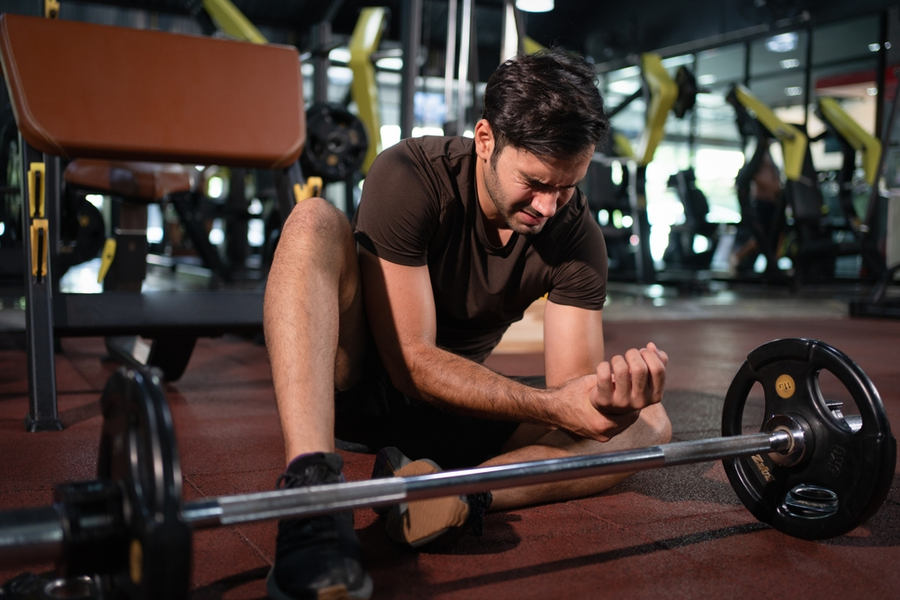
There is a strange bit of gym logic that says muscle only counts if it was built under a bar bending with plates. Heavy lifting can be brilliant, but if every squat makes your knees bark, every press annoys your shoulders, or every deadlift leaves your back feeling battered, forcing more weight is not dedication. It is poor problem-solving.
The good news is simple: building muscle does not require maximum loads every week. Muscle responds to tension, effort, consistency and progression. Heavy weights are one route to that, not the only route.
Pain Is Information, Use It
Joint pain should not be treated like a badge of honour. Normal training discomfort is usually muscular: burning quads, tired glutes, shaking arms, that sort of thing. Sharp pain, catching, swelling, numbness, instability or pain that gets worse week after week is different.
A useful rule is to separate muscle effort from joint irritation. A hard leg press should make your thighs work. It should not feel like your knee joint is being pinched. A chest press should challenge your pecs, shoulders and triceps. It should not produce a stabbing feeling at the front of the shoulder.
If pain is persistent, severe or linked to an injury, get it checked by a qualified professional. For general training aches, the aim is to load the muscles without repeatedly annoying the joint.
Use Machines Without Feeling Guilty
Some lifters treat machines like the soft option. Ignore them. Machines can be excellent for joint-friendly muscle building because they remove some of the stability demand and let you focus on the target muscle.
If barbell squats beat up your knees or back, a hack squat, leg press or belt squat may let you train your quads hard with more control. If barbell bench pressing irritates your shoulders, a converging chest press or cable press may feel smoother. If bent-over rows annoy your lower back, chest-supported rows are a sensible swap.
Seat height, foot position, grip width and range of motion all matter. But machines give you options, and options are what keep people training long enough to progress.
Make Lighter Weights More Effective

One of the easiest ways to train around joint irritation is to stop making load the only measure of success. A lighter weight can be brutally effective if you use it well.
Slow the lowering phase. Pause in the hardest part of the movement. Keep tension on the muscle instead of bouncing through reps. Add reps before adding weight.
A dumbbell split squat with a slow three-second descent can feel far more productive than rushing through heavier reps while your front knee complains. A cable lateral raise done slowly can build shoulders without the joint stress of aggressive pressing.
Choose Exercises That Fit Your Body
There is no single perfect exercise. There are only exercises that match your goal, body, injury history and current tolerance.
If conventional deadlifts irritate your back, try Romanian deadlifts, trap bar deadlifts, hip thrusts or hamstring curls. If straight-bar curls aggravate your wrists or elbows, try dumbbells, cables or an EZ bar. If overhead pressing feels rough, landmine presses, incline presses or machine shoulder presses might be better.
Small changes can make a big difference. A neutral grip can calm an angry shoulder. Moving from a barbell to dumbbells can allow a more natural path. Reducing depth slightly may help if a specific range causes pain, as long as you are not just shortening every rep to protect your ego.
Train The Muscles Around The Joint
A lot of joint-friendly training comes down to building better support. Stronger glutes can help many people manage lower-body training more comfortably. Hamstrings and calves matter for knees. Upper-back strength can help shoulder control. Better trunk strength can make lower-body lifts feel more stable.
This is where the less glamorous exercises earn their place. Hamstring curls, calf raises, cable rows, face pulls, lateral raises, split squats, step-ups and controlled core work may not look dramatic, but they often build the base that lets bigger lifts feel better.
Stop Maxing Out So Often
If your joints dislike heavy lifting, constantly testing your top-end strength is rarely wise. You can build muscle with moderate loads taken close to fatigue. You do not need to turn every session into a personal best attempt.
Leave a rep or two in the tank on big movements most of the time. Push harder on safer, more stable exercises. Progress can come from more reps, better control, cleaner technique, extra sets, shorter rest periods or improved consistency, not just more weight.
Warm Up For The Lift You Are Actually Doing
A good warm-up should make the first working set feel better. Start with a few minutes of easy movement, then use specific warm-up sets for the exercise ahead.
If you are training legs, build up gradually with lighter sets of the movement or a close variation. If you are pressing, include controlled shoulder and upper-back movement, then ease into the press pattern.
If the joint feels worse as you increase load, change the plan. Swap the exercise, reduce range, slow the tempo or move to a machine.
Keep Yourself In The Game
Building muscle when your joints hate heavy lifting is not about training timidly. It is about training with enough patience and intelligence to keep progressing.
Track what you do. Note loads, reps, pain levels and recovery. Patterns matter. If your elbow flares every time you combine heavy pressing, skull crushers and straight-bar curls, the problem is probably not mysterious. If your knees feel better with leg presses than back squats, that is useful information, not a moral failing.
Heavy is useful, but repeatable is better. The best exercise is not the one that looks hardest online. It is the one you can load, control, recover from and keep progressing for months. That is where real muscle gets built.