
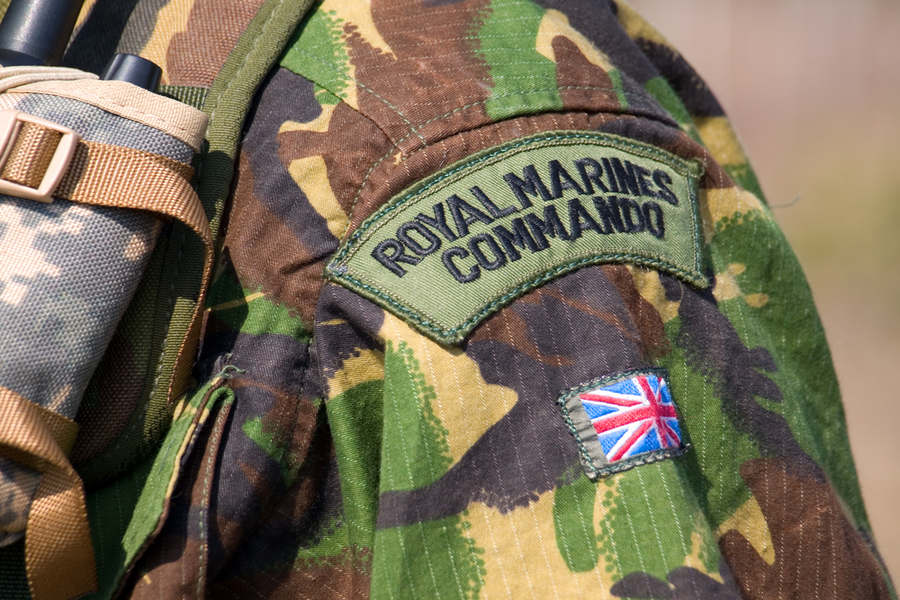
The Royal Marines operate in some of the world’s most demanding conditions, so physical fitness plays a major part in their selection and training.
You do not need to look like a bodybuilder to join, though. The assessments measure practical abilities including cardiovascular fitness, muscular endurance and relative strength. An impressive bench press will not help much if you cannot run, perform strict bodyweight exercises or keep going when tired.
So, what does the Royal Marines Fitness Assessment involve, and could a reasonably fit civilian pass it?
There Is More Than One Assessment
Applicants do not complete one fitness test and then forget about physical training.
The current joining process includes a Pre-Joining Fitness Assessment, followed by the Royal Marine Candidate Preparation Course and a two-week Recruit Orientation Phase at the Commando Training Centre Royal Marines in Lympstone.
During the Recruit Orientation Phase, candidates undertake the Royal Marines Fitness Assessment. Those progressing into mainstream training are expected to achieve the following standards during its opening two weeks:
- Level 11 on the Multi-Stage Fitness Test
- 40 press-ups
- 50 sit-ups
- Five overhand pull-ups
These standards offer civilians a useful fitness challenge, although attempting them at home is not the same as passing under assessment conditions.
The Multi-Stage Fitness Test
The Multi-Stage Fitness Test is better known as the bleep test. It involves repeatedly running between two markers placed 20 metres apart, reaching the opposite marker before each bleep.
The test begins at a manageable speed, but the time between bleeps gradually becomes shorter. It gets progressively harder until the runner can no longer maintain the required pace.
Reaching level 11 requires more than being able to jog for half an hour. You must repeatedly accelerate, stop and turn. A regular runner could therefore find it surprisingly difficult.
Press-Ups, Sit-Ups and Pull-Ups
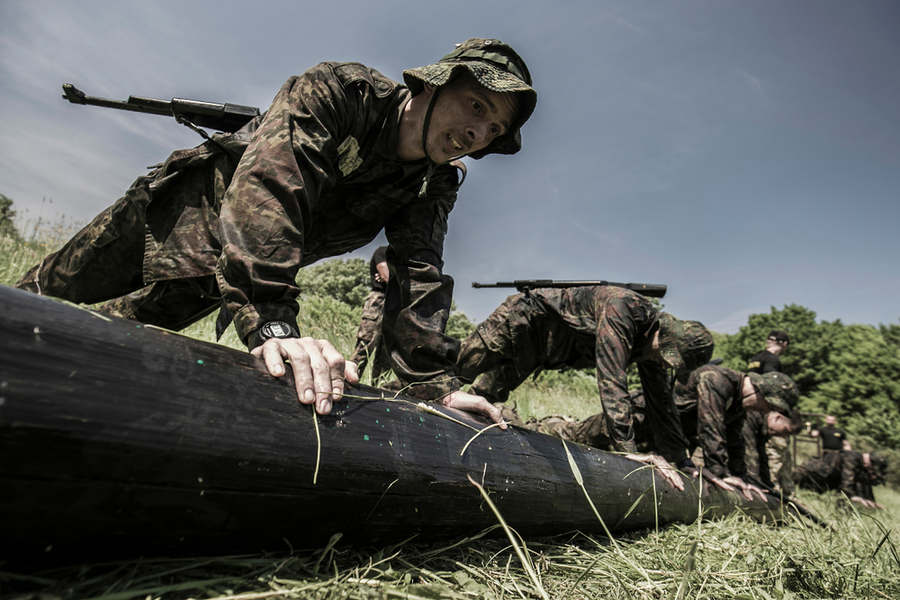
Forty press-ups may sound achievable to someone who regularly lifts weights. The difficulty is that the repetitions must be performed using the required technique.
Royal Navy guidance tells candidates to position their hands approximately shoulder-width apart, maintain a rigid body line and keep their elbows tucked in as they lower themselves. Poorly performed repetitions may not be counted.
Press-ups test the chest, shoulders and triceps, but also require core stability and muscular endurance. Someone with a strong bench press is not automatically good at them.
The 50 sit-ups also need to be controlled. Candidates begin with their knees bent and feet flat on the floor, with their fingertips lightly touching their temples. Starting too quickly can leave the abdominal and hip-flexor muscles exhausted before the required total is reached.
Five pull-ups is the lowest number on the list, but it could be the biggest obstacle for many gym users. Each repetition starts from a dead hang using an overhand grip. You must then lift your body through the required movement before returning under control.
Pull-ups test your back, arms and grip while requiring you to move your entire bodyweight. Many regular gym members who are comfortable using resistance machines struggle to perform even one strict repetition.
Do You Need to Be a Strong Swimmer?
Swimming is assessed during the wider selection process, including the Candidate Preparation Course.
Candidates are expected to step from a three-metre platform, swim approximately 150 metres using breaststroke, tread water for two minutes and climb out without using the steps. The assessment is conducted without goggles unless they are needed for a medical reason.
There is no time limit for the swim, so speed is not the main concern. It assesses confidence and basic competence in the water.
Could the Average Gym-Goer Pass?

Probably not without specific preparation.
A regular runner might handle the cardiovascular element but struggle with pull-ups. A weightlifter could complete the strength exercises but fall short on the bleep test. Someone attending general fitness classes may have a more balanced foundation but still be unfamiliar with the required techniques.
None of the individual standards is superhuman. The challenge comes from developing strength, endurance, aerobic fitness and swimming competence at the same time. Candidates must also perform while being formally assessed rather than choosing their own exercise order, rest periods and technique.
How Would You Train for It?
Preparation should reflect what is actually being tested. Include regular running rather than relying entirely on exercise bikes or cross-trainers. Combine steady aerobic sessions with intervals, shuttle runs and occasional practice attempts at the bleep test.
Practise press-ups, sit-ups and pull-ups using the official technique. Avoid attempting your maximum every day. Build volume through manageable sets and stop before your form deteriorates.
If pull-ups are your weakness, assisted repetitions, controlled lowering movements and dead hangs can help you progress. Swimming practice should also be included if you are uncomfortable in deep water or have not swum recently.
Increase the workload gradually and allow time for recovery. The Royal Navy publishes fitness programmes for applicants, and these should take priority over unofficial internet challenges if you are genuinely preparing to join.
The Verdict
A fit civilian could pass the Royal Marines Fitness Assessment, but general gym fitness would not guarantee it.
Reaching level 11 on the bleep test before completing 40 strict press-ups, 50 controlled sit-ups and five overhand pull-ups demonstrates impressive all-round fitness. Passing those numbers at home does not make you a Royal Marine, but it gives you an idea of whether your fitness resembles the starting point expected from someone entering one of the UK’s most demanding military training programmes.