
A home gym sounds appealing until you start pricing up dumbbells and working out where a bench would fit. Somewhere between the sofa and the drying rack, perhaps.
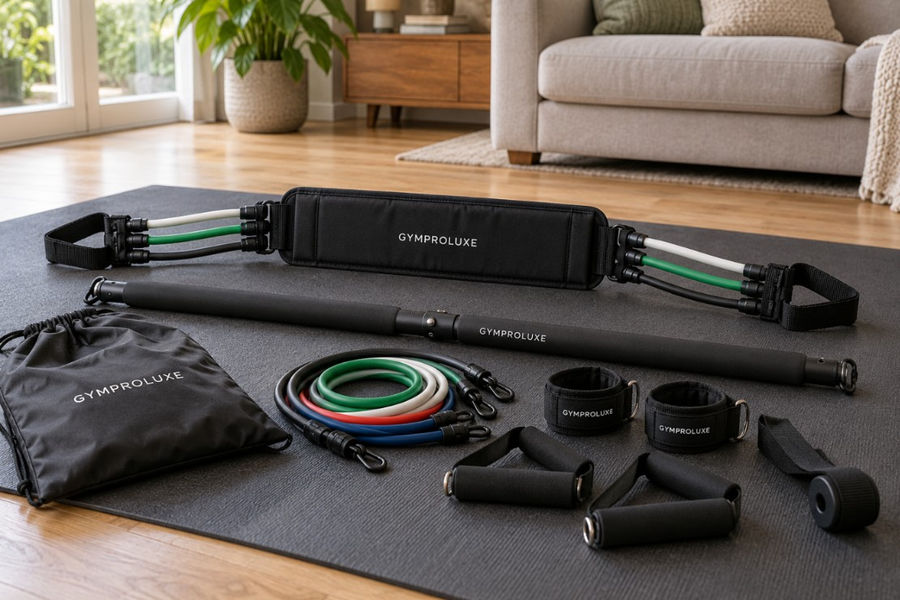
Gymproluxe offers a smaller solution: resistance bands, a padded belt and a detachable bar, packed into a bag. The Band and Bar Set 2.0 keeps things relatively simple, while the All-in-One Portable Gym adds accessories for more exercise options.
Both could make training at home easier. But convenience, resistance and results are different questions. The useful question is how well these sets fit the training you want to do, rather than how many gym exercises they claim to replace.
What Is the Difference Between the Two Sets?
The Band and Bar Set 2.0 includes a padded belt with handles, a detachable bar, six short resistance tubes and a carrying bag. The tubes come in pairs rated at 10kg, 15kg and 20kg, giving the advertised combined resistance of 90kg.
You position the belt behind your body or under your feet, depending on the exercise, and work against the tubes using the handles or bar. Engaging different tube combinations changes the resistance.
The All-in-One includes that equipment plus five longer resistance bands, a door anchor, two separate handles and two ankle straps. Those additions matter more than the name.
Longer bands and an anchor create different pulling angles, opening up movements such as pulldowns, face pulls and standing chest flyes. Ankle straps provide further options for leg and glute exercises. You still need a suitable door and must follow the anchoring instructions.
The All-in-One is the more expensive option, and the extra money mainly buys flexibility. It does not turn the smaller set into something equivalent to a fully equipped weights room.
What Does 90kg of Resistance Actually Mean?
This is where the numbers need context.
A barbell loaded to 90kg has that mass throughout the lift. Its difficulty still changes with your position and leverage, but the plates themselves do not become lighter halfway down.
Bands work differently. Their tension increases as they stretch. The resistance you experience depends on the tube, its starting tension, your body proportions and how far the movement stretches it.
Consequently, the combined 90kg rating is not a promise that every exercise feels like lifting a 90kg barbell. Without knowing how much resistance the tubes produce at different stretches, you cannot reliably translate their ratings into equivalent barbell loads.
That distinction can affect exercise quality. Testers reported little initial tension in some rows and deadlifts, along with awkward handles and belt movement. They also found useful applications, including curls and lateral raises. Fit and setup clearly deserve attention.
For tracking progress, record your band combination, position, repetitions and technique. More controlled repetitions with the same setup can show improvement. Comparing the printed resistance directly with your gym lifts is less useful.
Do not shorten the movement just to engage heavier bands. The goal is a challenging exercise you can perform properly, rather than an impressive number attached to a fairly small movement.
Can You Build Muscle and Strength With It?
Yes, resistance bands can provide effective strength training. The important qualification is that research supporting bands generally does not prove that Gymproluxe is uniquely effective.
A 2019 systematic review covering eight studies found no statistically significant difference in strength gains between elastic resistance and conventional equipment. The studies used different populations and programmes, and the authors highlighted limitations in study quality and load standardisation.
That supports taking band training seriously. It does not mean every band exercise matches its barbell equivalent, or that strength findings automatically prove identical muscle growth.
Gymproluxe makes stronger claims about variable resistance producing superior muscle gains and reducing injury risk. I did not find product-specific comparative research demonstrating those advantages.
Increasing tension through a movement can be useful, but it does not automatically match your strength at every joint angle. Nor does elastic resistance remove joint loading. If an exercise hurts, the fact that the equipment is marketed as joint-friendly is not a reason to continue.
The 20-minute workout idea is more reasonable. Short resistance sessions can be worthwhile, especially when they help you train regularly. You still need enough challenge, progression and recovery. The equipment cannot supply those simply by arriving in a branded bag.
Where Each Set Works Best and Where It Falls Short
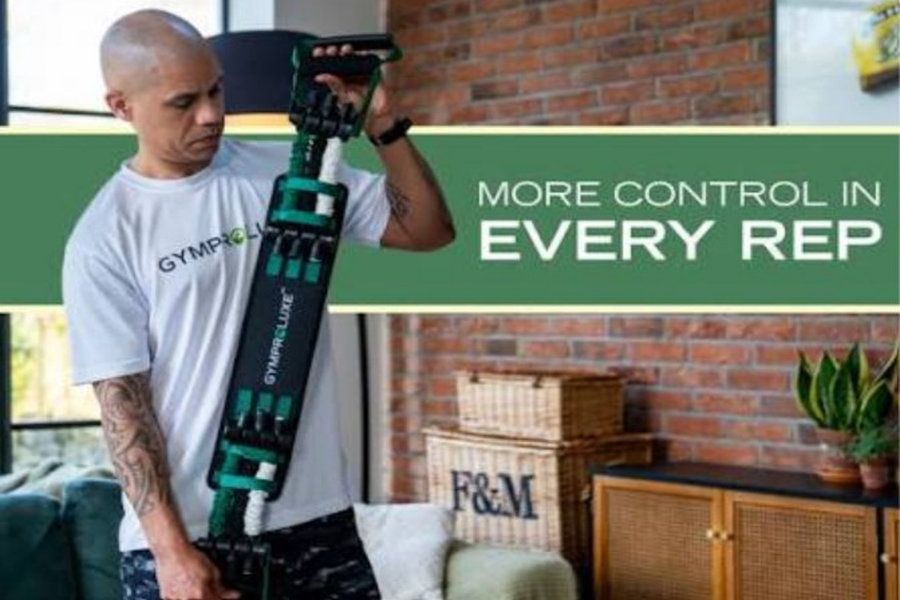
The 2.0 makes most sense for someone wanting compact equipment for straightforward home sessions or additional workouts between gym visits.
Independent feedback is strongest around its upper-body usefulness. Some people have praised chest training and quick adjustments but found lower-body options limited. That is a helpful distinction: being able to perform a version of an exercise does not necessarily make it a satisfying substitute.
The All-in-One is the more versatile choice for building a varied routine around bands. Separate handles and anchor points provide options that the belt alone cannot offer. If pulling movements and leg accessories feature in your plans, the upgrade has a clear purpose.
However, neither set provides the same experience as heavy squats, barbell deadlifts or a cable stack. An experienced lifter prioritising those movements should expect compromises. Someone starting strength training may find considerably more room to progress.
Also consider simpler alternatives. Ordinary bands, bodyweight exercises or adjustable dumbbells may meet your needs. Gymproluxe’s potential value lies in how its components work together and whether that makes training easier for you.
What Should You Check Before Buying?
Durability and support deserve attention alongside exercise selection. Owner feedback includes both satisfied users and reports of snapped bands, missing parts and replacement delays. Other customers describe quick replacements. These accounts identify concerns, but cannot tell us the overall failure rate or whether every report involves the same set.
Inspect bands and connections regularly, stop using damaged components and follow the manufacturer’s instructions.
The app includes free programmes, with additional features and content available through an optional Premium subscription. You can use the equipment without Premium, so there is no need to commit to another monthly payment just to get started.
The lifetime warranty is limited, including manufacturing-defect coverage and up to two replacements within 365 days, subject to review. There is also conflicting returns wording: the sales material promotes a results guarantee, while the help centre specifies unused items in original packaging. Get clarification before assuming you can train with it for a month and return it.
Choose the 2.0 if its particular exercises cover what you need. Choose the All-in-One if the extra attachments solve identifiable gaps. Either purchase makes more sense with a realistic routine in mind than a vague intention to cancel the gym and become remarkably fit in the spare room.