

For decades, mainstream conversations about weight loss treated failure as a personal shortcoming. If you couldn’t stay on a diet, the implication was that you lacked discipline. If the weight came back, you hadn’t tried hard enough. This framing placed the entire burden of a complex physiological process on an individual’s willpower, which is arguably one of the least reliable human faculties there is.
The arrival of a new generation of weight loss medications has forced a long-overdue rethink, not just of the biology of obesity, but of the psychology that surrounds it. Understanding what these medications actually do, and why they matter beyond the numbers on a scale, is worth exploring in some depth.
What GLP-1 Medications Actually Change
GLP-1, or glucagon-like peptide-1, is a hormone produced naturally in the gut in response to eating. It signals to the brain that the body has received food, slows the rate at which the stomach empties, and plays a key role in managing blood glucose levels. In people with obesity, the GLP-1 response is often dysregulated, meaning the satiety signal is weaker or slower than it should be, making it harder to feel full and easier to overconsume.
GLP-1 receptor agonists mimic this hormone at a pharmacological level. By doing so, they reduce appetite, slow gastric emptying, and help people feel satisfied with smaller portions. The effect on eating behaviour is significant enough that many people using these medications describe a fundamentally different relationship with food, one that is quieter, less driven by compulsion, and more responsive to genuine hunger and fullness cues.
The Medicines and Healthcare products Regulatory Agency (MHRA) has approved several GLP-1 medications for weight management in the UK. These include injectable options such as semaglutide (Wegovy) and tirzepatide (Mounjaro), as well as two oral GLP-1 tablets: the Wegovy pill (oral semaglutide), approved in June 2026, and Foundayo (orforglipron), approved in August 2026, making the UK the first country in Europe to approve both oral GLP-1 options for weight management.
Why This Changes the Mindset Conversation

The psychological dimension of GLP-1 medications is one of the most interesting and underreported aspects of their use. People who have been on GLP-1 medications consistently report something that goes beyond appetite reduction: a shift in the emotional relationship with food.
Food noise, the persistent mental chatter about eating, what you’ll have next, what you’re craving, how long until the next meal, is a real and debilitating experience for many people with obesity. It’s not weakness. It’s a neurobiological reality that GLP-1 medications appear to significantly quieten. When the constant background noise of food-related thoughts reduces, people report being able to think more clearly, engage more effectively with behavioural change, and make food choices from a more grounded place.
This is where the mindset work becomes genuinely effective. Cognitive approaches to eating behaviour, developing awareness of emotional eating, learning to distinguish physical hunger from psychological hunger, and building sustainable habits around movement and rest are all practices that require a degree of cognitive bandwidth that is genuinely difficult to access when food noise is overwhelming. GLP-1 medications appear to create the mental space in which these practices can take root.
Foundayo, Wegovy, and the Oral Pill Revolution
The arrival of Foundayo and the Wegovy pill represents a significant shift in access and practicality. Both are taken once daily by mouth, which removes the barrier that many people associate with injectable treatments. Needles are a real deterrent for a meaningful proportion of the population, and for some, the prospect of weekly injections is sufficient to put them off seeking treatment altogether.
Foundayo (orforglipron) and the Wegovy pill work through different mechanisms at the molecular level. Orforglipron is a non-peptide small molecule, meaning it doesn’t have the strict food-and-water requirements of oral semaglutide. The Wegovy pill requires an empty stomach and specific conditions to be absorbed properly. Foundayo can be taken at any time of day, with or without food, which makes it considerably more convenient for people with varied schedules or irregular meal patterns.
In clinical trials, Foundayo produced an average weight loss of approximately 12.4 per cent at the highest dose over 72 weeks, while the Wegovy pill showed approximately 16.6 per cent over 64 weeks. Neither figure represents every individual’s outcome, and the right choice between them involves conversations with a qualified healthcare professional about individual health history, lifestyle, and goals.
Accessing GLP-1 Weight Loss Tablets in Aberdeen and Scotland
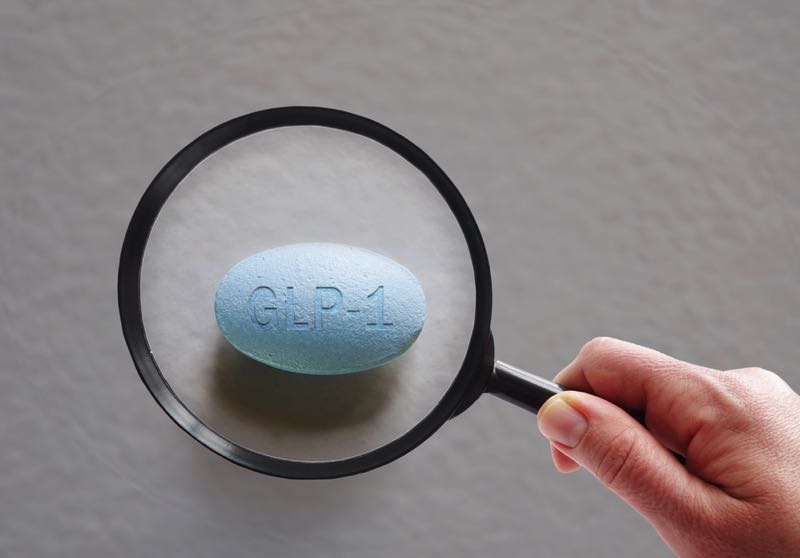
The regulatory picture across Scotland is nuanced. NHS Grampian, like other Scottish health boards, has advised that GLP-1 medications for weight loss are not currently being prescribed by GP practices for weight management, as specialist review processes for these pathways are still being developed.
This has led many people in the Aberdeen area to seek access through private pharmacy services. For those exploring weight loss tablets aberdeen through private routes, working with a regulated pharmacy that conducts thorough health assessments and provides ongoing support is essential. Any legitimate provider of prescription GLP-1 medications will conduct a clinical assessment, confirm eligibility based on BMI and health criteria, and monitor progress throughout treatment. This is not optional; it is a legal and clinical requirement.
The eligibility criteria for GLP-1 weight management medications in the UK generally require a BMI of 30 or above, or a BMI of 27 or above with at least one weight-related health condition such as hypertension or sleep apnoea. These criteria exist because these are prescription medications with side effect profiles that need to be assessed against an individual’s overall health picture.
The Role of Habit and Behaviour Change
One of the clearest messages from both clinical research and lived experience is that GLP-1 medications work best when combined with meaningful behaviour change. The medications reduce appetite and create a biological environment more conducive to weight loss, but they don’t automatically produce the habit changes that sustain weight management over the long term.
This is where the work of building habits, understanding the mindset patterns that underpin eating behaviour, and developing a sustainable relationship with movement comes in. People who use the reduced appetite and quieter food noise that GLP-1 medications create to embed new patterns of eating, activity, and sleep tend to maintain better outcomes than those who treat the medication as the complete solution.
There is also emerging evidence that some people who have achieved significant weight loss on injectable GLP-1s are subsequently transitioning to oral options like Foundayo to maintain their results in a more convenient daily routine. The transition requires medical supervision, and outcomes vary, but it points toward a future where GLP-1 medications are not just acute interventions but tools within a longer-term health management strategy.
What the Evidence Says About Long-Term Success

The data on GLP-1 medications is still accumulating, particularly for the newer oral options. What is clear from the research so far is that weight regain after stopping GLP-1 treatment is common, typically reversing a significant proportion of the weight lost during treatment. This is not evidence that the medications don’t work; it is evidence that obesity is a chronic condition, not an acute one, and that the biology underlying it doesn’t disappear when medication is withdrawn.
Managing expectations around this is part of the mindset work. Treating GLP-1 medication not as a cure but as a tool in a wider approach, one that includes sustainable eating habits, regular movement, stress management, and sleep quality, gives people the most realistic picture of what success looks like over time.
The most honest framing is this: GLP-1 medications create a biological and psychological environment that makes lasting change significantly more achievable than it would be through effort and willpower alone. The change still requires effort. But it’s a qualitatively different kind of effort, one that’s less exhausting and more productive.
Finding the Right Support
No one should start or stop GLP-1 weight management medications without proper clinical guidance. Beyond the eligibility assessment, the monitoring of side effects, particularly gastrointestinal effects that are common in the early stages of treatment, requires professional oversight. The decision about which medication, which dose, and how long to continue treatment is clinical, not commercial, and should always be made in partnership with a registered healthcare professional.
Scotland has a growing range of private pharmacy services offering appropriate assessment and access to these treatments. The key is finding support that takes the whole picture seriously: the biology, the behaviour, and the mindset together.