
Finding a full hour for the gym is not always realistic. Even a 30-minute workout can be difficult to squeeze into a busy day when work, family life and everything else compete for attention.
Exercise snacking offers a different approach. Instead of relying entirely on longer workouts, you complete several short bursts of purposeful activity at different points during the day.
An exercise snack could be a brisk climb up the stairs, a quick set of squats or a short burst on an exercise bike. It might last a couple of minutes or even less. The aim is not to remove the effort. It is to make that effort easier to fit into your routine.
Research suggests these mini workouts can help physically inactive people improve their fitness. However, exercise snacking should not be treated as a miracle shortcut or a complete replacement for a balanced weekly routine.
What Does Exercise Snacking Mean?
Exercise snacks are brief, intentional bouts of physical activity completed at different times throughout the day.
There is no single definition used in every study. Researchers have tested short stair-climbing efforts, bodyweight exercises, resistance work and other small doses of activity. A recent review defined exercise snacks as structured bursts lasting no more than five minutes, completed at least twice a day on at least three days a week.
You do not need to treat those numbers as strict rules. The key principles are simple:
- Keep the sessions short.
- Spread them across the day.
- Choose exercises that provide a meaningful challenge.
- Repeat them regularly enough to build a habit.
The word “snack” can be slightly misleading. A genuine exercise snack should normally raise your heart rate, challenge your muscles or interrupt a long period of inactivity.
Walking to the kitchen is still better than staying in your chair for hours. However, it is more accurately described as a movement break. Walking briskly up several flights of stairs or completing a focused set of chair squats is closer to an exercise snack.
Is Exercise Snacking The Same As HIIT?
Exercise snacking and high-intensity interval training can overlap, but they are not the same thing.
A traditional HIIT workout usually involves several hard efforts and recovery periods grouped together in one planned session. Exercise snacks separate those efforts across the day.
Some exercise snacks are vigorous, while others are more moderate. A beginner may find a controlled set of chair squats challenging enough. A fitter person may need a harder stair climb or a fast burst on an exercise bike.
The right level depends on your current fitness and experience. Every mini workout does not need to become an all-out effort.
What Does The Research Say?

The strongest evidence comes from a systematic review and meta-analysis published in the British Journal of Sports Medicine. Researchers examined 11 randomised controlled trials involving 414 physically inactive participants.
The review found moderate-certainty evidence that exercise snacks improved cardiorespiratory fitness in inactive adults. This refers to the ability of the heart, lungs and circulatory system to supply oxygen during physical activity.
The researchers were more cautious about other possible benefits. The available data did not support firm claims that exercise snacks improve measures such as blood pressure, cholesterol or body composition.
One frequently cited study involved sedentary young adults climbing a three-flight stairwell vigorously three times a day, with recovery periods of between one and four hours. They completed the routine three days a week for six weeks. The stair-climbing group improved its cardiorespiratory fitness compared with a control group, although the absolute improvement was modest.
That is a fair summary of the evidence. Exercise snacking can make a real difference, but realistic expectations matter.
Why Short Workouts Can Still Be Useful
A workout does not become worthless because it is short.
The NHS advises adults to do some physical activity every day, reduce the amount of time spent sitting and break up long periods without movement. Adults should still aim for at least 150 minutes of moderate-intensity activity or 75 minutes of vigorous activity each week, alongside strengthening activities on at least two days.
Exercise snacks can contribute to a more active week and help reduce the hours spent sitting continuously.
They can also solve a practical problem. Many people assume exercise only counts when it involves changing clothes, travelling to a gym and completing a full session. When that feels impossible, the workout gets abandoned.
A two-minute session creates a much lower barrier to getting started. This can help people with desk-based jobs, busy parents, beginners and anyone returning to regular activity after a long break.
What Counts As An Exercise Snack?

The best exercise snacks are simple enough to start quickly. You should not need a complicated routine or a collection of equipment every time you want to move.
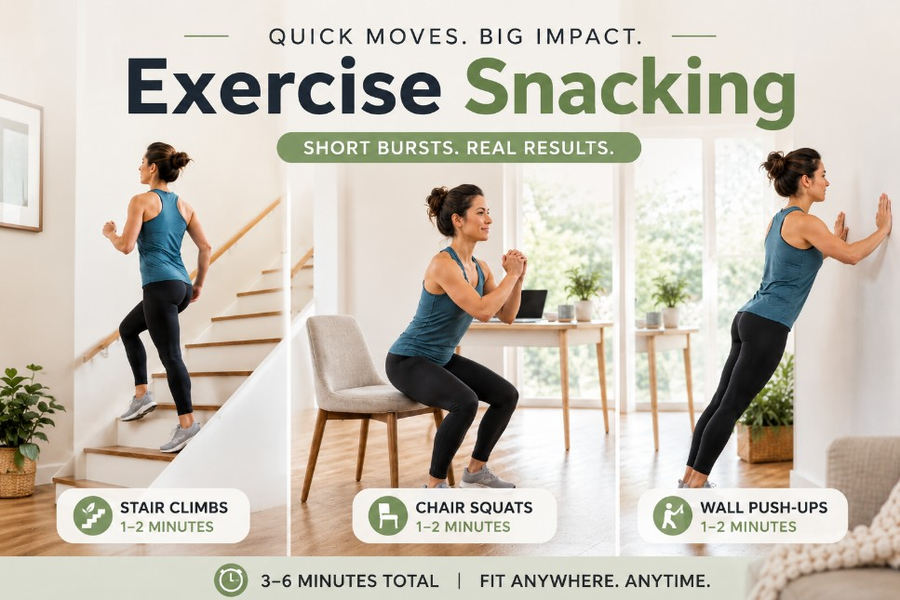
Stair Climbing
Walk or climb briskly up a flight of stairs, then recover as needed. Repeat the climb if it suits your fitness level.
Chair Squats Or Bodyweight Squats
Stand up from a chair and sit back down under control, or complete a set of bodyweight squats. Chair squats are a useful starting point if standard squats feel too demanding.
Wall Press-Ups Or Incline Press-Ups
Wall press-ups are accessible for beginners. Incline press-ups against a stable worktop, desk or bench offer a more challenging progression.
Brisk Walking
Walk quickly enough to raise your heart rate and make your breathing noticeably faster. A gentle stroll is a useful movement break. A purposeful brisk walk is more likely to provide a fitness stimulus.
Resistance-Band Rows
Keep a resistance band near your desk or in a convenient place at home. A short set of rows helps include upper-body pulling work in a routine that might otherwise focus heavily on squats and stairs.
Exercise-Bike Bursts
Complete a short burst on an exercise bike at an effort appropriate for your fitness level, followed by enough recovery to return safely to your normal activities.
How Hard Should An Exercise Snack Feel?
Not every mini workout needs to leave you gasping for air.
The NHS describes moderate-intensity activity as exercise that raises your heart rate and makes you breathe faster while still allowing you to talk, but not sing. Vigorous activity makes you breathe hard and fast, meaning you will struggle to say more than a few words without pausing for breath.
Use that as a simple guide. Some exercise snacks can be moderate, especially when you are starting out. Others can become more vigorous once you have built a base level of fitness.
A Simple Exercise-Snacking Routine For Beginners
The easiest way to make exercise snacks stick is to attach them to habits that already happen every day.
Try this simple starting routine:
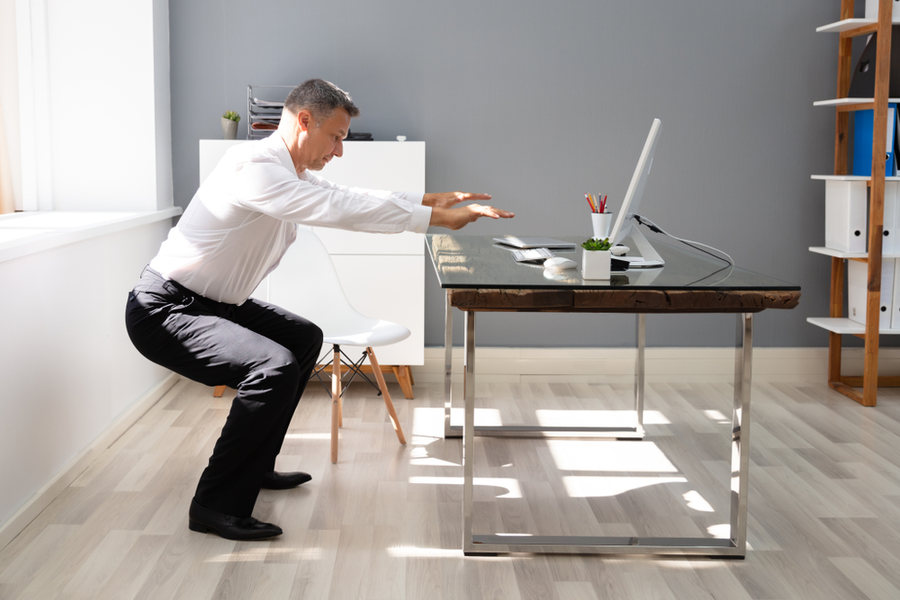
- Morning: complete one controlled set of chair squats after breakfast.
- Lunchtime: take a short, brisk walk after eating.
- Afternoon: complete a set of wall press-ups after a prolonged period at your desk.
- Evening: walk briskly up the stairs a few times or complete a set of calf raises while dinner cooks.
Start at a manageable level. After a week or two, increase the repetitions, add another exercise snack or make one session slightly more challenging.
How To Build A Balanced Routine
A random set of squats every few days is better than nothing, but some structure will make exercise snacking more useful.
Across the week, try to include aerobic activity such as brisk walking, stairs or cycling, alongside lower-body and upper-body exercises. Resistance-band rows are particularly useful because they add a pulling movement that is easy to overlook.
Exercise snacks should complement the wider activity guidelines rather than replace them. They are not a shortcut to weight loss, a substitute for recovery or a complete training plan for a specific goal.
Small Sessions Can Be A Sensible Starting Point
Exercise snacking works because it is practical.
When the alternative is another hour sitting down because you cannot find time for a full workout, a short burst of activity is worth doing. Repeat that process throughout the day and it can become a realistic way to improve your fitness, reduce long periods of inactivity and build a more consistent exercise habit.
You do not need to overhaul your whole lifestyle on day one. Pick one simple exercise snack, attach it to an existing habit and start there.