
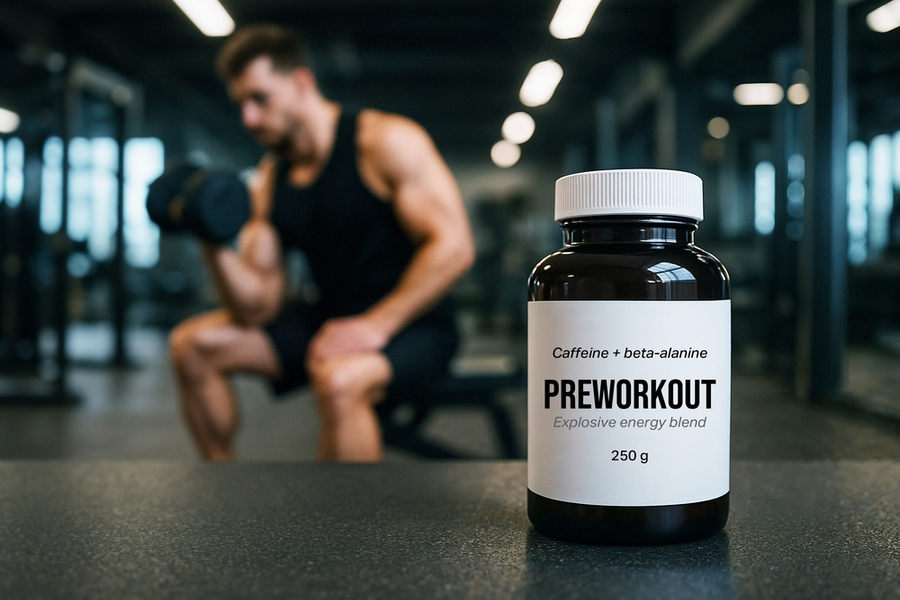
You arrive at the gym after work, feeling about as energetic as the office printer. Someone nearby mixes a brightly coloured drink, talks about their pre-workout kicking in and starts warming up with considerable enthusiasm.
It is easy to wonder whether you are missing something.
Pre-workout supplements can help, but the answer depends on the ingredients, their amounts and the training you actually do. Caffeine often explains much of the immediate benefit. Other ingredients may contribute, but putting them together in one scoop does not automatically make the product better value.
Caffeine Does A Lot Of The Work
Caffeine has good evidence behind it. It can improve exercise performance, particularly endurance, and may also help muscular endurance, strength and movement speed. The benefits vary between people and are not guaranteed in every workout.
It can make effort feel more manageable and improve alertness. That is useful when you are facing a demanding session, although feeling more awake does not mean you have suddenly become fitter.
Research commonly uses around 3–6mg of caffeine per kilogram of body weight, often taken about an hour before exercise. These are research doses, not instructions to aim for the highest number. Lower amounts can work, and larger doses increase the likelihood of side effects.
Coffee can also provide a performance benefit. Its caffeine content varies with the beans, preparation and serving size, so it is less predictable than a clearly labelled product. Nevertheless, caffeine does not need a tropical flavour or an aggressive name to do its job.
Does The Whole Blend Beat Caffeine Alone?
This is where the evidence becomes less tidy.
Studies of multi-ingredient pre-workouts have found benefits in some measures, including muscular endurance and perceived energy, but results are mixed. Products contain different combinations and quantities, making it difficult to apply one study’s findings to an entirely different tub.
A product beating a caffeine-free placebo also does not prove that its extra ingredients add anything beyond caffeine.
For example, a small 2024 trial involving ten resistance-trained women compared a pre-workout, caffeine alone and a placebo. Neither caffeine nor the pre-workout improved repetitions to failure in the bench press or leg press.
That does not settle the question for every person or product. It does show why a long ingredient list deserves closer inspection rather than automatic approval.
Some Ingredients Need Consistency
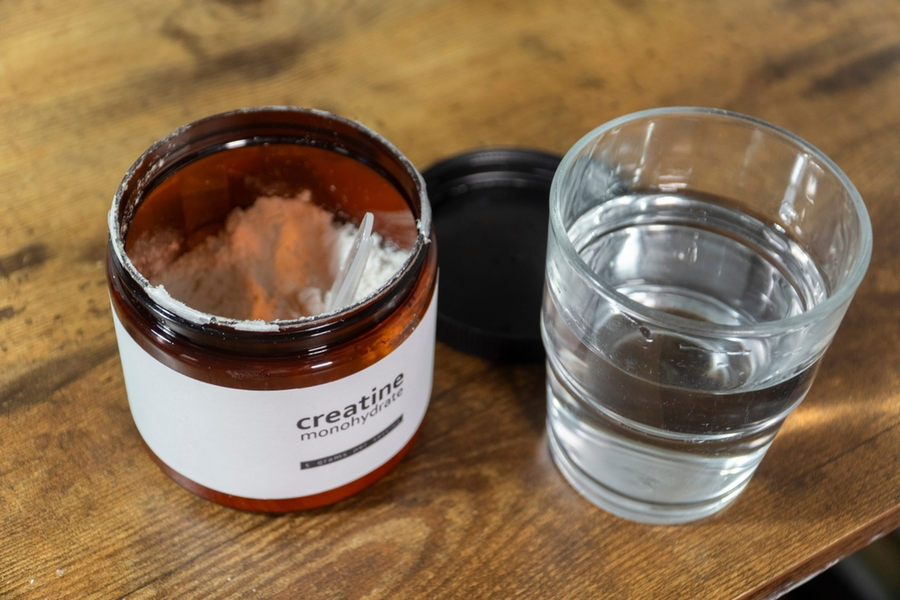
Creatine monohydrate is a useful example. It has strong evidence for supporting repeated high-intensity efforts and training adaptations. However, it works by increasing muscle creatine stores, rather than providing an instant burst of motivation.
A common approach is 3–5g daily, with stores increasing gradually over several weeks. Taking it only before occasional workouts is a less reliable way to achieve that. Buying creatine separately also lets you take it on rest days without adding caffeine you do not want.
Beta-alanine works over time too. Regular supplementation increases muscle carnosine, which helps buffer acidity during intense exercise. Evidence is strongest for certain hard efforts lasting roughly one to four minutes, with studied protocols commonly using 4–6g daily for at least two to four weeks.
It can also cause tingling. That sensation is a side effect, rather than evidence that your muscles are receiving an especially effective workout.
Both ingredients may be worthwhile for particular goals. Their presence in a pre-workout does not guarantee that the serving provides an appropriate amount or that your usage matches the research.
A Bigger Pump Is Not The Whole Story
Citrulline is often included to support nitric oxide production and blood flow. It is associated with the pursuit of a bigger muscle pump, but evidence for improvements in exercise performance is less consistent than the evidence for caffeine or creatine.
You may enjoy the sensation of fuller muscles during a session. That alone does not establish that you will build more muscle over the following months.
The practical question is whether an ingredient helps the activity you are doing, at the quantity supplied. A claim about blood flow is not enough to answer that.
Remember The Rest Of Your Day
Check your total caffeine intake before adding a pre-workout to your routine. Coffee, tea and energy drinks all count.
EFSA identifies single doses up to 200mg and daily intakes up to 400mg as levels that do not raise safety concerns for most healthy, non-pregnant adults. Those figures are not targets, and individual sensitivity matters.
Timing matters too. Even 100mg close to bedtime can affect sleep in some adults. An evening supplement that improves today’s enthusiasm but disrupts tonight’s sleep may be a poor trade for tomorrow’s training.
If caffeine causes anxiety, palpitations or unpleasant restlessness, more is unlikely to improve your experience. Anyone taking medication or managing a medical condition should check the ingredients with a pharmacist or appropriate clinician before using a blend.
Read The Label Before Paying For The Promise

Look for individual ingredient quantities per serving. A proprietary blend that gives only a combined weight makes it harder to judge what you are getting.
Also check whether the advertised serving means one scoop or two. Compare the actual caffeine content and useful ingredient amounts at the serving you intend to take.
Work out the cost per session. As a simple example, a £30 tub containing 30 servings costs £1 each time. If you use two servings, the cost doubles, along with the ingredients.
The relevant comparison is with what you would otherwise use: perhaps your usual coffee, or separately purchased creatine. Convenience has value, but it helps to know what you are paying extra for.
When Is Pre-Workout Worth It?
A transparent formula can be worthwhile if its ingredients suit your training, you tolerate it well and the convenience justifies the cost. You might also enjoy having a consistent routine before a demanding session.
However, if caffeine is the main ingredient providing a noticeable benefit, coffee may meet your needs perfectly well. If you want creatine’s longer-term benefits, a separate daily supplement is another straightforward option.
Start with the problem you want to solve. Occasional low energy is different from repeatedly training without enough food, sleep or recovery. A supplement cannot organise those things for you.
Pre-workout can earn a place in your routine. It should earn that place through useful ingredients and a sensible cost, rather than how dramatically you feel it kicking in.